Tag Archives: bash

bash getopts

Bash Getopts – Scripts with Command Line Options

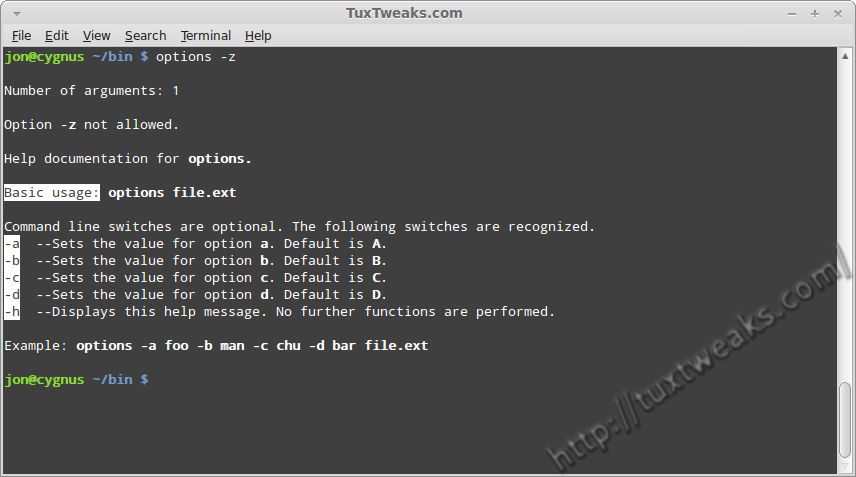
I’ve always wanted to know how to create command line options for my Bash scripts. After some research I found there are two functions available to handle this; getopt and getopts. I’m not going to get into the debate about which one is better. getopts is a shell builtin and seems a little easier to implement than getopt, so I’ll go with that for now.
Continue reading

Linux watch with pipe

Command Line Basics – watch

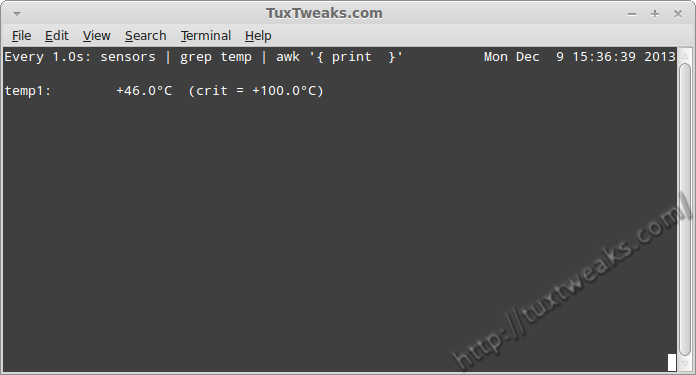
There are several log files in a Linux system. Keeping an eye on these log files can be one of the important tasks of a Linux System administrator. You can easily view the end of a log file using the tail command. But if you want to monitor that file all day long it’s pretty tedious to enter the tail command every few minutes to check on that log file. You could write a short script  with an infinite loop to check the file periodically, but it turns out that there is already a program to handle repetitive tasks for you. Continue reading

Keeping Track of My IP Address

My main computer at home acts as a file and media server for the whole house, so it’s pretty much turned on all the time. There are times when I’m away from home that I want to remotely access or download a file from my home computer. My home internet service uses a dynamic IP address and every once in a while we get a short interruption to our power that forces the modem to reset. Of course, when that happens, the modem pulls a new IP address. I thought it would be handy if I could come up with a script to keep track of my current IP address for me. Continue reading

Command Line Basics: Finding Files

In today’s post I’m going to show how to use the command line find program to search for files. There are certainly different GUI tools available in Linux, such as Beagle, to search for files. The advantage of many of these systems is that they index the files on your system so that the searching is rather fast. The disadvantage is that the indexing can often slow down system performance, so many users end up disabling it. There’s also the situation where you might not have access to a GUI, like when you’re logged in to your web hosting server through ssh. Continue reading